03 01 00 · Maintenance of Concrete
Concrete spall repair and remedial patching for commercial sites
Spalls are the pits and broken edges that open up at joints, dock edges and wheel paths. They catch carts, pallet jacks and heels, and they grow every time water and traffic hit them. Remedial patching removes the loose concrete back to a sound surface and rebuilds the area with a repair material suited to the depth and traffic, so it doesn't pop back out.
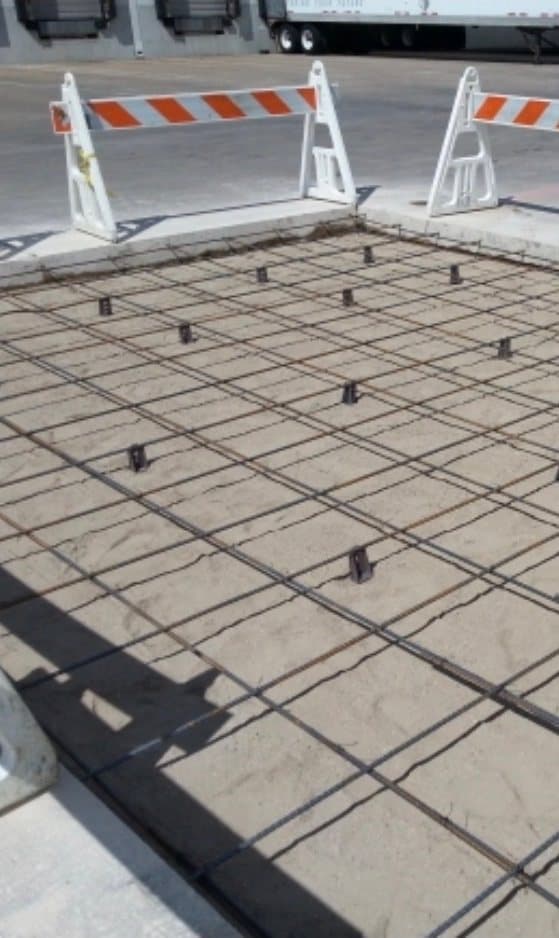
01 · How it works
What the work involves
The most common reason patches fail is poor preparation, not the repair material. A durable patch needs square, saw-cut edges with no feathered rims, removal of all unsound concrete, a clean surface roughened enough to bond, and a repair material used within the depth range its manufacturer lists.
Spalling can come from several causes: debris trapped in joints that the slab crushes as it expands, corroding reinforcement close to the surface, or a weak, overworked surface layer. If rusted reinforcement is exposed during removal, it's cleaned and treated before the patch goes in.
When damage goes through the slab or the panel has lost support, patching isn't enough. That's a section replacement (see Commercial Concrete Restoration).
04 · Work methodology
How we do it
- 01
Sound and mark
Find hollow-sounding areas and mark the limits of the repair.
- 02
Saw-cut
Cut square perimeters to the required depth.
- 03
Remove and prepare
Chip out unsound concrete, then clean and profile the surface.
- 04
Treat steel
Clean and treat any exposed reinforcement.
- 05
Place and cure
Place the repair material within its rated depth, then finish and cure it.
05 · Materials and systems
Products are selected per project from the specification or, where there is none, from manufacturer data sheets matched to the joint movement, traffic and exposure. Your written proposal names the exact products before work starts.
06 · Field photos
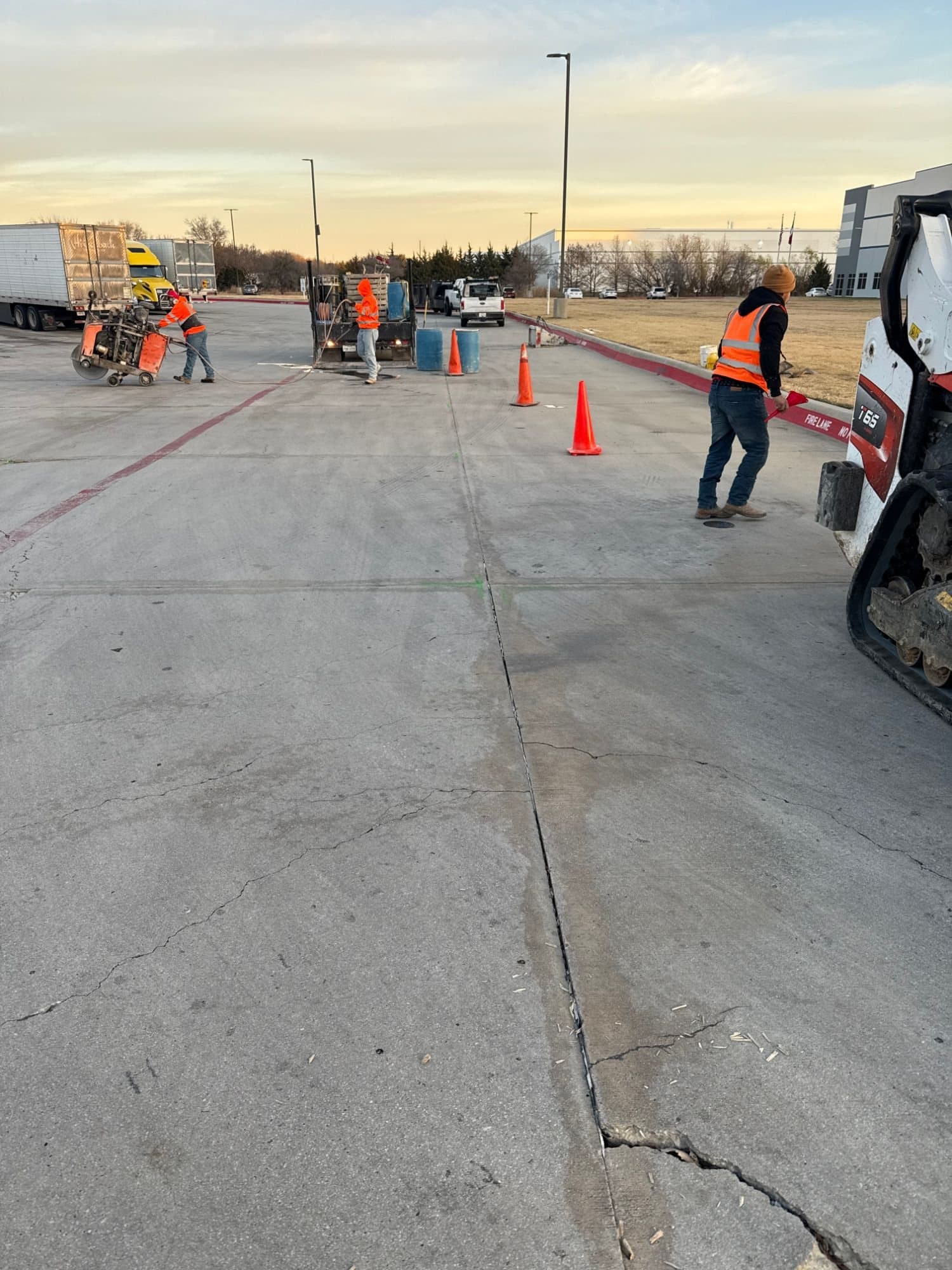
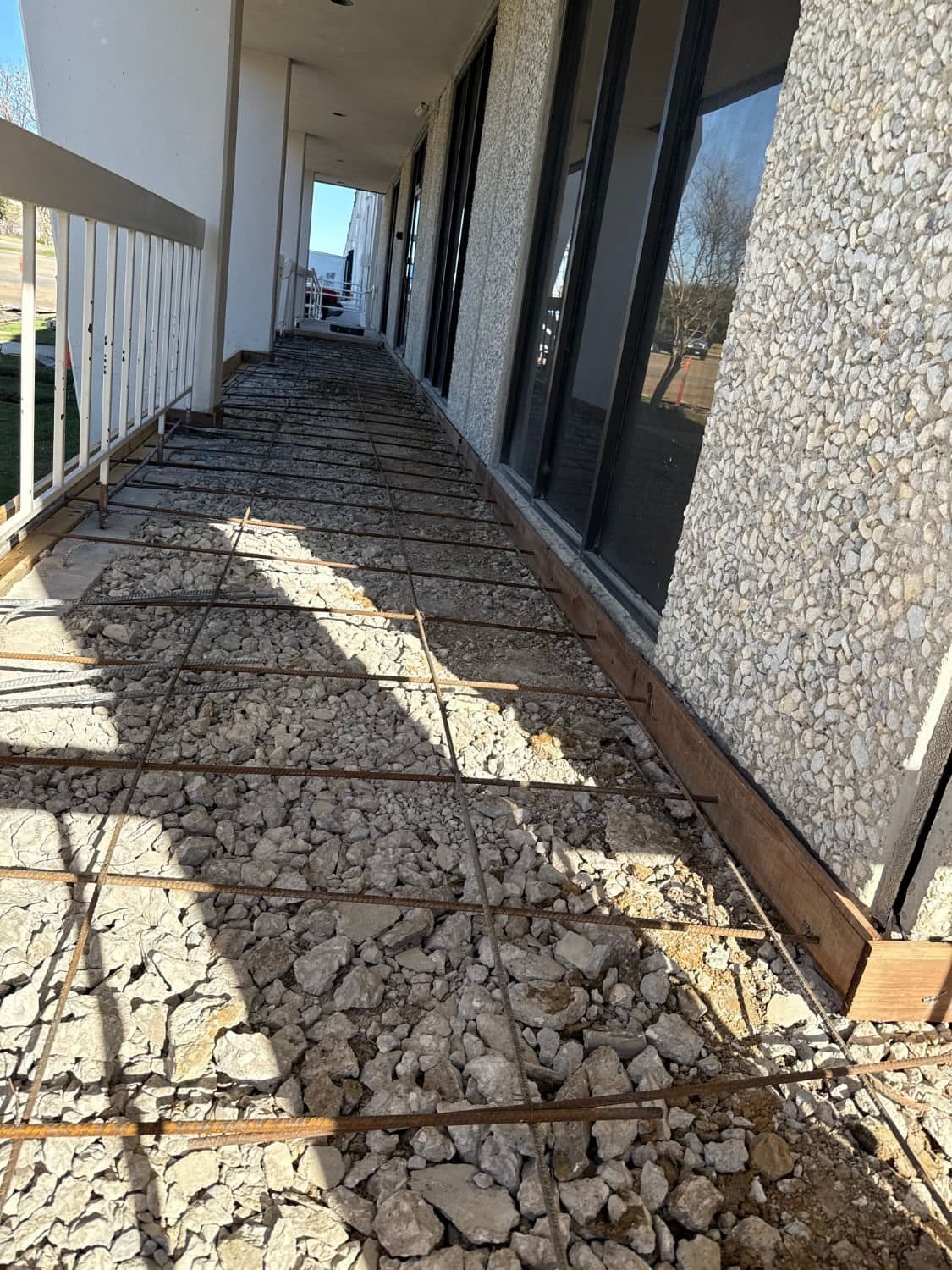
07 · Buyer questions
Questions property and project managers ask
- How soon can traffic go back on a patch?
- Rapid-setting repair materials can take traffic in hours. Standard mixes need longer. We'll pick the material based on how long you can close the area.
- Why did our last patches fall out?
- Usually the edges were feathered, loose concrete was left under the patch, or the material was placed thinner or thicker than its rating. We'll look at the old patches when we visit.
Start a project · 03 01 00
Remedial Patching: send us the site.
Send photos, the address and a rough size on WhatsApp. We reply with questions or a site visit time. Prefer to talk? Call or text the same number.