07 92 00 · Joint Sealants
Vertical joint sealant replacement for tilt-wall and masonry buildings
Tilt-wall buildings across DFW's industrial corridors depend on the sealant in every vertical panel joint. Those joints open and close each day as the panels heat and cool. When the sealant splits or lets go of one side, water runs straight into the wall. We cut out failed sealant and install new joints built to move.
01 · How it works
What the work involves
A working sealant joint bonds to two faces only: the two sides of the joint. A backer rod or bond-breaker keeps it from sticking to the back of the joint. If it bonds on three sides it can't stretch, and it tears at the first cold night.
Joint geometry is set by the sealant manufacturer's guidance. As a general rule the sealant is shallower than it is wide, with an hourglass profile tooled against the backer rod. The joint faces must be clean and sound, so old sealant, coatings and laitance are removed first. A primer is used where the manufacturer requires one.
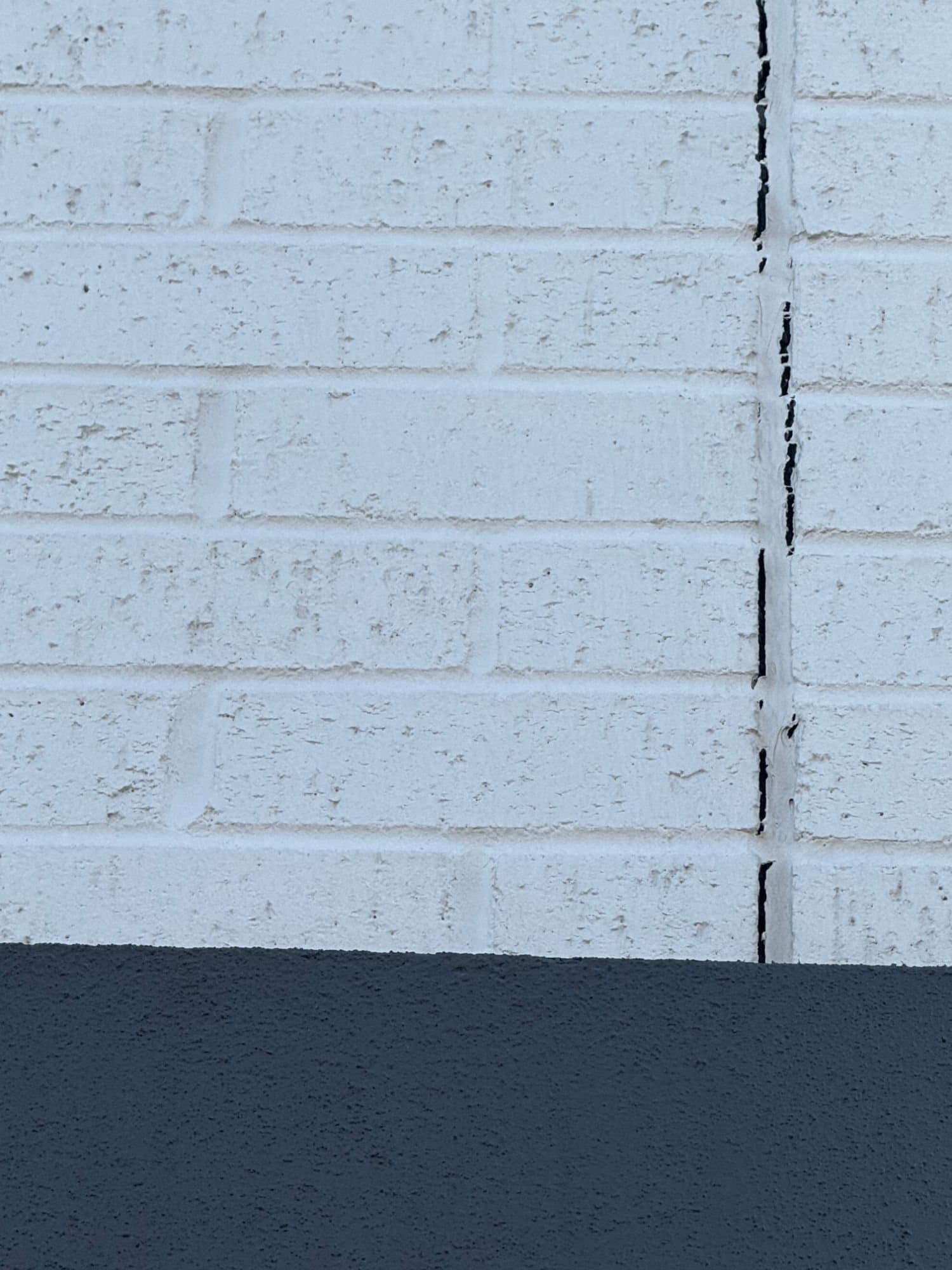
Joints on painted surfaces need extra care. Paint over a sealant or under it can cause an adhesion failure that looks like a sealant failure. The photo on this page shows that pattern on a painted brick wall.
04 · Work methodology
How we do it
- 01
Survey the joints
Count and measure the joints and log how each one failed.
- 02
Cut out
Remove the old sealant and backer, and grind the faces to sound substrate.
- 03
Backer and prime
Install closed-cell backer rod at the right depth and prime where required.
- 04
Seal and tool
Install the sealant and tool it to a concave profile with full contact on both faces.
- 05
Inspect
Check adhesion and appearance, and clean the adjacent surfaces.
05 · Materials and systems
Products are selected per project from the specification or, where there is none, from manufacturer data sheets matched to the joint movement, traffic and exposure. Your written proposal names the exact products before work starts.
06 · Field photos
07 · Buyer questions
Questions property and project managers ask
- Can new sealant go over the old sealant?
- Not as a lasting repair. New sealant doesn't bond reliably to aged sealant, and capping a joint traps the original failure. Old sealant is cut out.
- How are high joints reached?
- With lifts sized to the building height and site conditions, planned with your property manager. Access equipment is listed in the proposal.
- Can you match a painted wall?
- Many sealants come in multiple colors, and some can be painted. We'll confirm compatibility with the manufacturer before recommending paint over a joint.
Start a project · 07 92 00
Vertical Joint Sealants: send us the site.
Send photos, the address and a rough size on WhatsApp. We reply with questions or a site visit time. Prefer to talk? Call or text the same number.